

Every dispensary selling concentrate cartridges has the same opportunity hiding in plain sight: the customer standing at your counter with a cart in hand is almost always a battery sale waiting to happen. The attach rate on that transaction — how often you actually capture it — depends on whether you have the right battery on the floor, in the right configuration, at the right moment.
Most dispensaries are leaving that sale on the table. Not because they don’t stock batteries. Because they stock them without thinking through what actually drives the purchase — and what sends a customer home frustrated.
Here’s what experienced dispensary buyers evaluate before they place a wholesale 510 battery order, and why it matters more than the per-unit cost.
Related reading: How to Protect Dispensary Margins in 2026
The milliamp hour (mAh) rating tells you how much charge a battery holds. It’s the single most common source of customer dissatisfaction with 510 batteries — not because it’s complicated, but because most dispensaries stock only one capacity tier and hope it covers everyone. It doesn’t.
A 650mAh battery is a solid option for a casual user who consumes a few times a week. For a daily user pulling from their cart multiple times a day, a 650mAh battery is going to need recharging mid-session. That customer returns the battery not because it’s defective — but because it didn’t match their usage pattern. Your floor staff takes the hit.
A practical assortment covers two tiers at minimum:
650mAh: Entry-level capacity. Approachable price point. Best for casual or occasional users. Easy for floor staff to recommend as a starter option for first-time cart buyers.
900mAh+: Mid-to-high capacity. Built for the daily user who doesn’t want to think about charging. This customer knows what they want and will come back for it when they find a battery that keeps up with their consumption.
Matching the battery to the customer’s consumption pattern — not just their cart — is the conversation your staff should be having. The right battery recommendation reduces returns and builds the kind of trust that brings customers back.
Not all SKUs perform equally during 420. Here’s what moves fastest and what your There are two firing mechanisms in the 510 category, and they’re not interchangeable for all customers.
Draw-activated (auto-draw): The battery fires automatically when the user inhales. No button, no five-click on sequence, no learning curve. For a dispensary serving a lot of first-time or occasional users, draw-activated batteries reduce counter returns significantly — the most common complaint with button-activated models is “I can’t get it to work,” which is almost always a user who didn’t know how to power it on.
Button-activated:. More deliberate — experienced users prefer it because it gives them control over draw length and temperature. Pair with variable voltage and you have a battery that appeals to customers who care about their experience, not just their cart.
If your floor serves a mix, carry both. But know your customer.
A fixed-voltage battery runs at one output. That’s fine when it works — and a problem when a customer’s oil viscosity doesn’t match the voltage.
Thick distillates need higher voltage (3.7V–4.2V) to vaporize properly. Thin live resin oils at the same voltage will burn off terpenes and taste harsh. A variable voltage battery — where the customer dials in their preferred output — solves this across the whole range.
The practical benefit for your floor: fewer “this tastes burnt” complaints. Fewer “it’s not hitting right” returns. A customer who can adjust the battery to their cart’s viscosity is a customer who blames the cart for problems, not the battery you sold them.
Randy’s carries variable voltage options across its 510 battery line — no menus, no app, no learning curve beyond a simple adjustment.
Browse Randy’s full vaporizer line, including multiple capacity and voltage options →
Here’s what a 4% defect rate looks like in practice: you order 500 units, 20 come back. Each return requires staff time. Some customers want a replacement. Some want a refund. A few just leave frustrated and don’t come back.
Here’s what that same volume looks like at sub-1%: four or five units across your entire order. Manageable. Expected. Handled in minutes.
Ask any supplier you’re considering: what is your documented defect rate? A supplier who tracks it will give you a number. A supplier who says something like “we have very low returns” is telling you they don’t track it — which means they can’t control for it.
Randy’s maintains a defect rate under 1% across its full battery line and backs every unit with a 1-year warranty. That warranty isn’t a marketing line — it’s a process. When something goes wrong, there’s a clear path to resolution that doesn’t require your staff to manage a complicated back-and-forth.
See Randy’s warranty coverage →
A dispensary doesn’t need six 510 battery SKUs. It needs three, done well:
Put them in a counter display near your cartridge section — not behind the counter, not in a case across the room. The attach rate difference between adjacent placement and separated placement is significant. The purchase logic is visible to the customer the moment they’re holding a cart: they need power for it.
Your wholesale supplier should help you build that assortment, not just take the biggest order you’ll give them.
Ready to open a wholesale account or build your 510 battery program with Randy’s? Our sales team will help you put together the right order.

Key Takeaways – What to Know About Wholesale 510 Batteries for Dispensaries
510 batteries are one of the highest-margin, fastest-turning add-on SKUs in a dispensary. They connect to pre-filled concentrate cartridges via a universal 510 thread and power the heating element that converts oil to vapor. When buying wholesale, dispensary buyers should evaluate four key factors: battery capacity (mAh), activation type, voltage range, and supplier defect rate.
Capacity: Stock at minimum two tiers — 650mAh for casual users and 1100mAh or higher for daily users. A capacity mismatch is the leading cause of battery returns.
Activation type: Draw-activated batteries fire automatically on inhale and suit new users. Button-activated models require a five-click on sequence and suit experienced users who want control over their draw.
Voltage range: Most concentrate cartridges perform best between 3.3V and 4.2V. Variable voltage batteries let customers adjust output to match their oil’s viscosity — reducing “tastes burnt” complaints and returns.
Defect rate: Ask any supplier for their documented defect rate before ordering at volume. At 500 units, the difference between a 1% and 5% defect rate is the difference between 5 returns and 25. Randy’s maintains a defect rate under 1% across its 510 battery line, backed by a 1-year warranty on every unit.
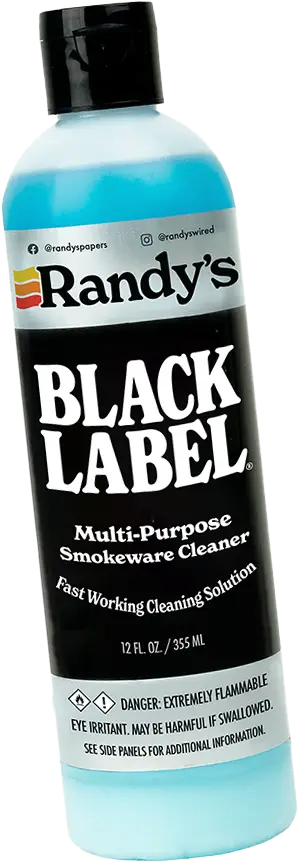
Upgrade your routine with our complete cleaning kit: no forgotten essentials, no extra hassle.